Commercial laundry is resource intensive. It uses water. It uses energy. It involves transport and textiles. For hotels, restaurants and commercial operators across Scotland, that footprint is now under scrutiny.
Clients, investors and procurement teams are asking better questions. How much water is being used? What are the emissions per cycle? Are suppliers aligned with Net Zero commitments?
Making your commercial laundry eco-friendly does not mean compromising on hygiene or quality. It means working with a provider that manages those pressures properly.
Here is what that looks like in practice.

Start With Energy & Carbon Reduction
Energy is one of the largest contributors to laundry emissions.
A responsible commercial laundry provider should:
- Operate under ISO 50001 energy management systems
- Track Scope 1 and Scope 2 emissions annually
- Have a clear reduction pathway aligned to UK Net Zero targets
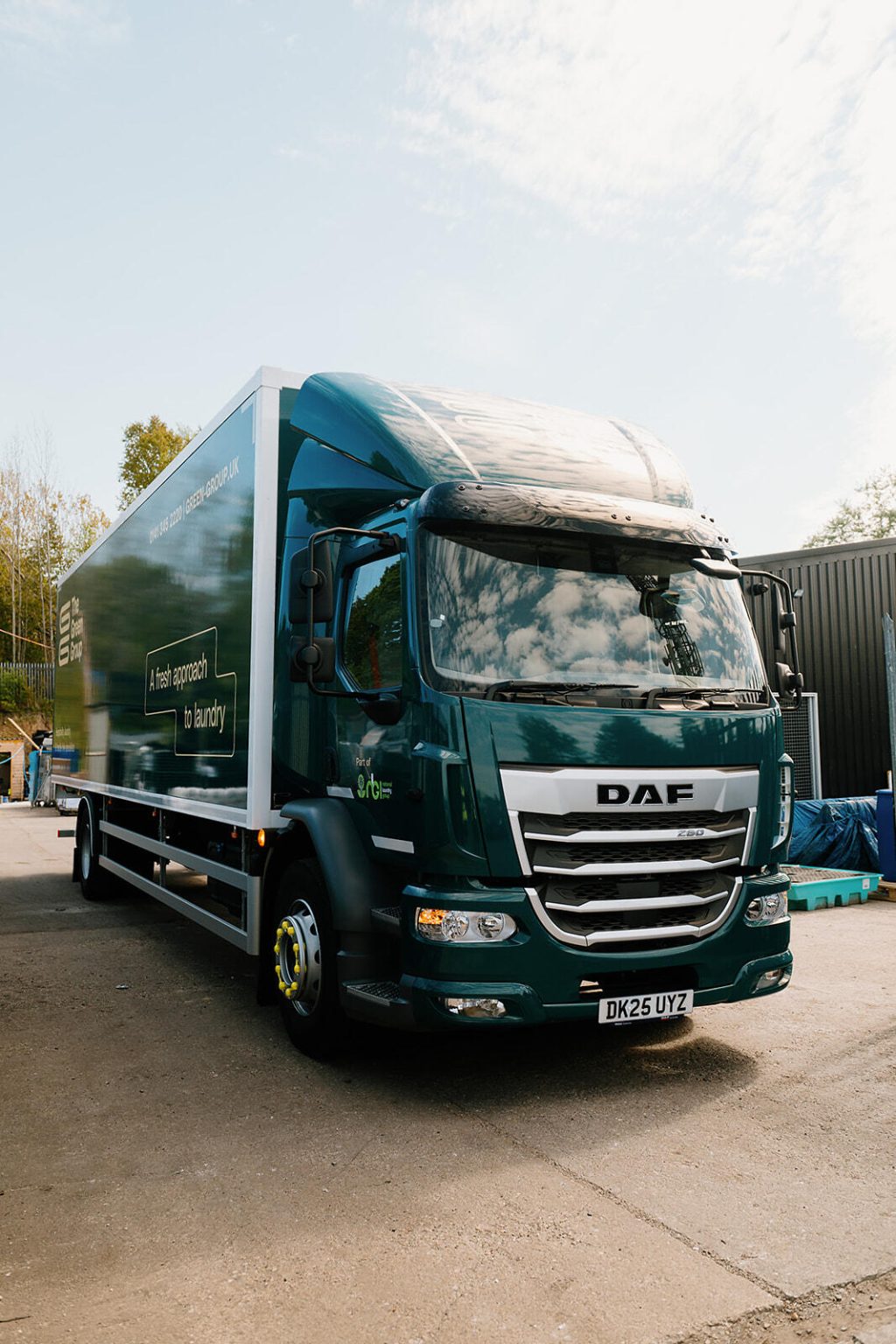
- Transition delivery fleets towards electric or low-emission vehicles
Cutting Scope 1 and 2 emissions by 50% by 2030 is not a marketing statement. It requires boiler upgrades, insulation improvements, LED retrofits, renewable electricity contracts and fleet electrification.
If your laundry partner cannot explain their carbon roadmap, it is worth asking why.
Reduce Water Consumption
Water stewardship is central to eco-friendly laundry.
Advanced wastewater heat recovery systems can dramatically reduce water usage at production sites. Modern facilities reuse thermal energy and optimise rinse cycles without affecting hygiene outcomes.
Water efficiency is also tied to process control. Overloading, poor sorting and inconsistent wash parameters increase water use unnecessarily.
For larger hotel groups operating in Scotland, reducing embedded water use in linen supply can significantly improve ESG reporting metrics.
Extend Textile Life Through Smart Tracking
Replacing linen frequently increases waste, cost and carbon footprint.
RFID textile tracking systems allow stock to be monitored at item level. That improves:
- Visibility of losses
- Rotation control
- Lifespan extension
- Replacement planning
Extending textile life supports circular economy goals and reduces landfill impact. It also lowers your total cost per use.
Sustainable laundry is not just about what happens in the wash. It is about how long the textile lasts.
Cut Plastic & Packaging Waste
Single-use plastics remain a major issue in hospitality supply chains.
Forward-thinking providers are actively reducing plastic wrapping, targeting measurable reductions year on year. Repurposing unusable textiles and minimising landfill contributions are also critical steps.
If you operate across multiple sites, these improvements add up quickly.
Strengthen Chemical & Hygiene Controls
Eco-friendly does not mean lower standards.
Compliance with EN 14065 hygiene frameworks ensures infection control remains robust. Chemical management policies aligned with modern environmental regulations reduce microfibre and wastewater impact.
The goal is safe, sustainable processing, not diluted hygiene.
Governance Matters
Sustainability without governance is fragile.
Board oversight of ESG policy, annual GHG inventory reporting and alignment with ISO 14001 environmental management standards demonstrate structured accountability.
Accreditations such as PAS91 SSIP Gold and EcoVadis validation provide external assurance that environmental commitments are embedded, not just stated.
For larger chains and procurement departments, this level of transparency matters.

Why Eco-Friendly Laundry Is Now a Commercial Advantage
Across Scotland’s hospitality sector, sustainability is no longer a marketing extra. It is part of procurement scoring. It influences brand perception. It affects investor reporting.
Switching to a genuinely eco-friendly commercial laundry partner can:
- Lower your Scope 3 emissions
- Support water reduction targets
- Improve supply chain resilience
- Strengthen ESG disclosures
The right partner becomes part of your sustainability strategy, not just a service provider.
FAQs
How can I measure the environmental impact of my laundry provider?
Ask for their annual greenhouse gas inventory, ISO certifications and carbon reduction roadmap.
Does eco-friendly laundry cost more?
Not necessarily. Efficiency improvements often reduce long-term operational costs and textile replacement rates.
Can switching providers reduce our Scope 3 emissions?
Yes. Supply chain emissions sit within Scope 3. Choosing a lower-carbon provider directly supports reduction targets.
Will sustainable processes compromise hygiene standards?
No. Accredited systems such as EN 14065 ensure hygiene and infection control remain fully compliant.
If you are looking to make your commercial laundry eco-friendly, speak to our team today. We’ll review your current setup and show you exactly how your linen supply can support both operational performance and measurable carbon reduction.